A number of successful Facebook groups have recently been established for people interested in antique tools in general and in specific tools and their uses, like axes and hammers. The Facebook groups that I have seen have members from the US, UK, France, French-speaking Canada, Italy, Australia, and Sweden. To give you an opportunity to exchange with other masonry tool and trowel collectors and post photos of your tools, I have created a Facebook group for you:
Trowel & Masonry Tool Collector
You must already be a Facebook member. Go to the group page and request to join the group. I will approve you as soon as possible. Please start posting your pictures.
Wednesday, May 27, 2015

Thursday, May 21, 2015
History of Hubbard Jointer Co.
Hubbard Jointer Company (Hubbard Jointers, Inc.) makes barrel-style brick jointers and sled runners which have replaceable tubular steel blades. Hubbard is located in Cheney, Washington, southwest of Spokane. The company founder was Richard Thomas Hubbard, born 25 Feb., 1907, in Owatonna, Minnesota. His father was from England and his mother from Canada. Mr. Hubbard died at age 100 on 10 Dec., 2007, in Spokane, Washington. Mr. Hubbard was a bricklayer and contractor who invented masonry tools and related items.
His son tells his father's story on the company website:
My father, Dick Hubbard, started laying brick in Sioux Falls, South Dakota in 1924. He continued as a bricklayer and masonry contractor until 1965. During the latter years of his bricklaying career Dick began to develop tools for his own use that were better than anything then commercially available. His friends began asking for them. Then people from further and further away asked for them. In 1960 Dick began commercial production of the Hubbard Jointer. In 1965 he quit laying brick to devote all of his time to the Hubbard Jointer Company. I bought the company from my father in 1986. Dad was 79 years old and thought he might like to do something else for a while. Dad passed away in 2007, just short of one hundred and one years of age. In keeping with the conduct of his entire life his last words to me were “It is good.”
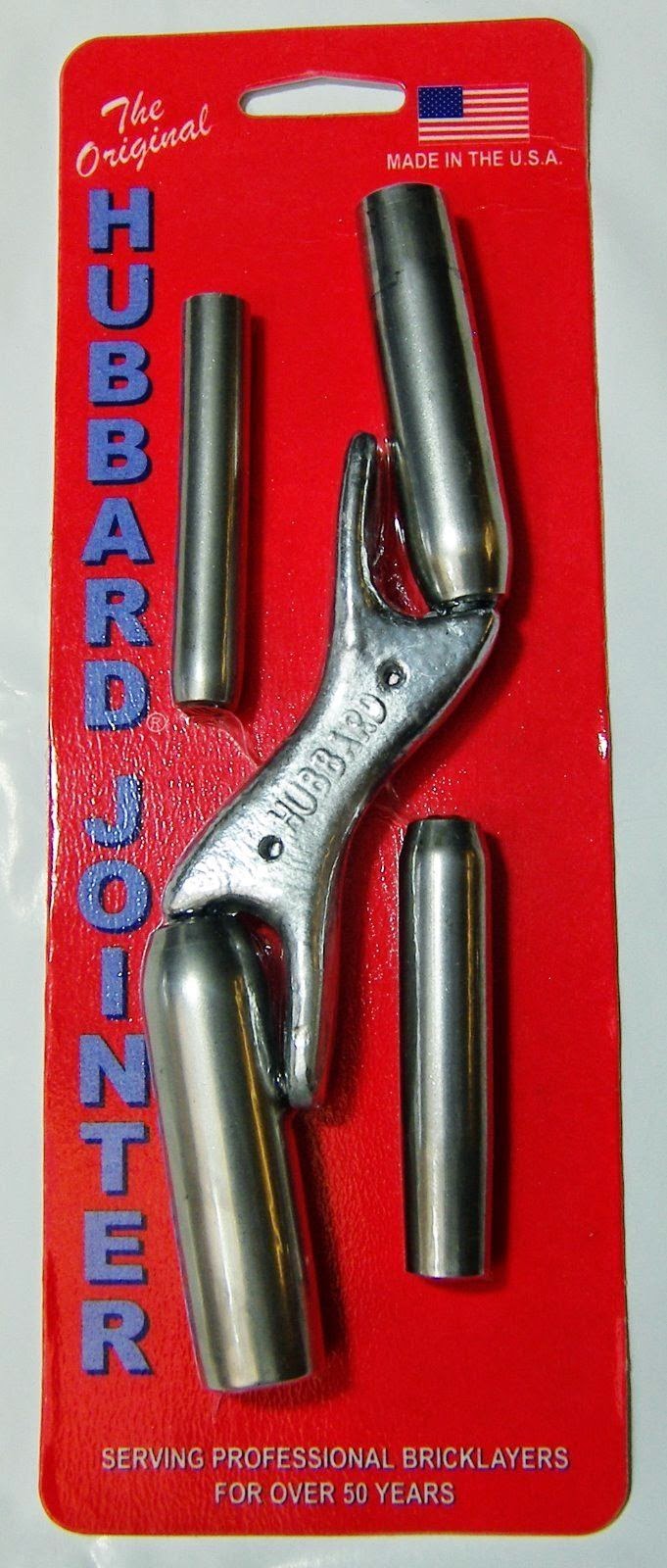 |
| Hubbard brick jointer |
My father, Dick Hubbard, started laying brick in Sioux Falls, South Dakota in 1924. He continued as a bricklayer and masonry contractor until 1965. During the latter years of his bricklaying career Dick began to develop tools for his own use that were better than anything then commercially available. His friends began asking for them. Then people from further and further away asked for them. In 1960 Dick began commercial production of the Hubbard Jointer. In 1965 he quit laying brick to devote all of his time to the Hubbard Jointer Company. I bought the company from my father in 1986. Dad was 79 years old and thought he might like to do something else for a while. Dad passed away in 2007, just short of one hundred and one years of age. In keeping with the conduct of his entire life his last words to me were “It is good.”
Mr. Hubbard's US patents include these, but I have been unable to locate any jointer patents:
Level, US 2487245 A, issued 8 Nov., 1949
Spirit level holder, US 2557291 A, issued 19 June, 1951
Illuminated spirit level, US 3003054 A, issued 3 Oct., 1961
Spirit level, US 3110115 A, issued 12 Nov., 1963
Level, US 2487245 A, issued 8 Nov., 1949
Spirit level holder, US 2557291 A, issued 19 June, 1951
Illuminated spirit level, US 3003054 A, issued 3 Oct., 1961
Spirit level, US 3110115 A, issued 12 Nov., 1963
 |
| Hubbard sled runner |
Tuesday, March 24, 2015
Update on Reopening of Footprint Tools
Good news for home-country manufacturing comes from the web publication DIY Week, which covers the hardware trade in the United Kingdom. The quote below is in comments on a 2009 article.
Footprint Re-Opening
3/23/2015 10:05:00 AM
By Tim Jewitt
A few years later than all the other comments but wanted to explain further what happened.
When we entered into liquidation in 2009 we were asset rich, but cash poor. We had of plenty of assets but no cash with which to pay staff and bills with.
The main reason for this was that we were moving to a new factory and investing in custom made forging equipment. Therefore we had ceased production to move into the new factory and had invested heavily in building up finished stock to cover us for the period of the move.
Unfortunately the recession hit and all the cash was tied up as stock and not selling to generate cash. We had to pay wages, bills plus the additional cost of moving all our machinery (most machines were several tons in weight and are embedded in concrete foundations) led to no cash.
As a family it was heartbreaking decision to enter Members Voluntary Liquidation. My grandfather (second generation)and father had worked there all their lives. You could say Footprint was member of our family.
We did use the government to step in and pay the redundancy. However, much to the Civil Service's surprise (apparently this doesn't happen very often) we did fully repay the Government for all the redundancy pay that they had paid. All our staff were kept fully informed of the decision and why we had made it and what was going to happen.
When we closed the business the family still owned a lot of the assets. But it was decided to have another go, we started up smaller. When we were closing we didn't think we would re-start again so had sold off most of machinery, including our large forging equipment, to raise cash to eventually pay all our creditors and redundancy payments.
The new company is predominantly made up of old employees and we are growing.
In January 2014 we bought a larger forge and are now forging everything ourselves. We are slowly growing the business again and winning back customers who had re-sourced to Chinese or Indian made products.
As a family we learned that timing is everything and for us we got the timing wrong. When we closed we were turning ourselves around and investing in new custom made machinery, we were planning on growing not shrinking.
Thank you to all our customers who have supported Footprint as we rebuild Footprint Tools and invest in British manufacturing.
Footprint Re-Opening
3/23/2015 10:05:00 AM
By Tim Jewitt
A few years later than all the other comments but wanted to explain further what happened.
When we entered into liquidation in 2009 we were asset rich, but cash poor. We had of plenty of assets but no cash with which to pay staff and bills with.
The main reason for this was that we were moving to a new factory and investing in custom made forging equipment. Therefore we had ceased production to move into the new factory and had invested heavily in building up finished stock to cover us for the period of the move.
Unfortunately the recession hit and all the cash was tied up as stock and not selling to generate cash. We had to pay wages, bills plus the additional cost of moving all our machinery (most machines were several tons in weight and are embedded in concrete foundations) led to no cash.
As a family it was heartbreaking decision to enter Members Voluntary Liquidation. My grandfather (second generation)and father had worked there all their lives. You could say Footprint was member of our family.
We did use the government to step in and pay the redundancy. However, much to the Civil Service's surprise (apparently this doesn't happen very often) we did fully repay the Government for all the redundancy pay that they had paid. All our staff were kept fully informed of the decision and why we had made it and what was going to happen.
When we closed the business the family still owned a lot of the assets. But it was decided to have another go, we started up smaller. When we were closing we didn't think we would re-start again so had sold off most of machinery, including our large forging equipment, to raise cash to eventually pay all our creditors and redundancy payments.
The new company is predominantly made up of old employees and we are growing.
In January 2014 we bought a larger forge and are now forging everything ourselves. We are slowly growing the business again and winning back customers who had re-sourced to Chinese or Indian made products.
As a family we learned that timing is everything and for us we got the timing wrong. When we closed we were turning ourselves around and investing in new custom made machinery, we were planning on growing not shrinking.
Thank you to all our customers who have supported Footprint as we rebuild Footprint Tools and invest in British manufacturing.
Thursday, March 19, 2015
Spear & Jackson Catalogue Scans
 |
| Spear & Jackson 1970 |
Spear & Jackson Catalogue T3, around 1930
Spear & Jackson 1961 Home Catalogue (all)
Spear & Jackson 1961 Home Catalogue (trowels, saws, other builder's tools)
Spear & Jackson 1970 Hand Tool Catalogue
Spear & Jackson 1974 Catalogue
The 1970 includes Brades (WHS) and Tyzack brand tools. The contents are on page number 3, and it includes many trowels and other masonry tools. Most of my scans are 300 dpi, with inside pages in grayscale. Because of the amount of color, this scan is 150 dpi with all pages in color.
Thursday, February 5, 2015
Johnson Level and Hyde Tools
I would like to compliment Johnson Level and Hyde Tools for doing what almost no tool companies do, put copies of their old catalogs on their websites. It shows they care more about their heritage than just using it in advertising slogans. I have used both Johnson and Hyde tools for decades. Please take a look at these old catalogs:
Johnson Select Catalogs Through History
Hyde Tools Historical Catalogs
Johnson Select Catalogs Through History
Hyde Tools Historical Catalogs
Subscribe to:
Posts (Atom)